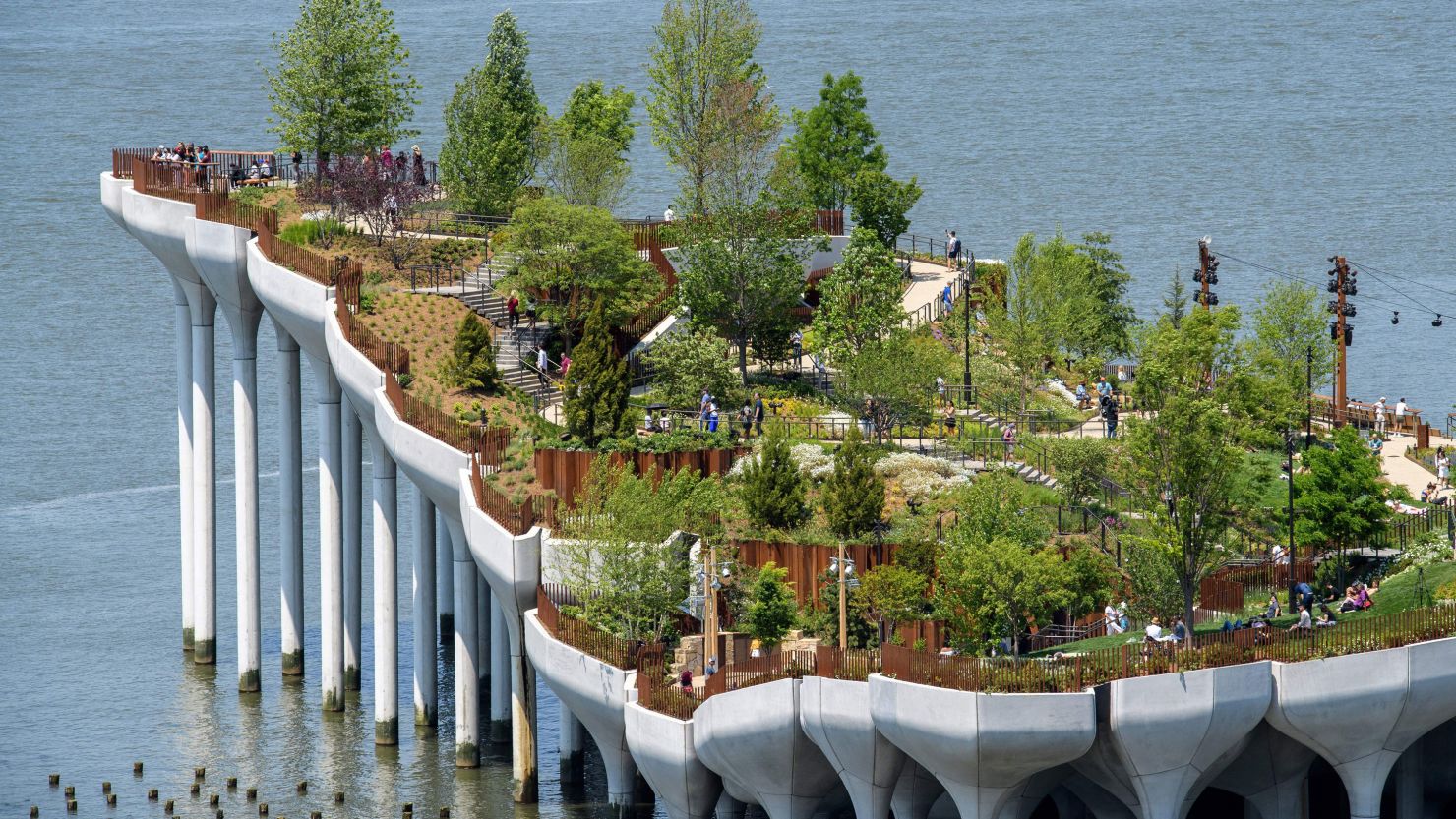
Little Island
A public park built on a pier with unique architecture and terraced landscaping.
Stop for a moment to view the elevated garden structures.

New York City offers over 1,300 miles of bike lanes and paths, from car-free greenways along the Hudson to tree-canopied loops through Central Park. Whether you're after waterfront views, urban exploration, or a quiet escape from traffic, the city's cycling infrastructure connects you to neighborhoods, parks, and landmarks most visitors never see from a taxi.
Quick answer
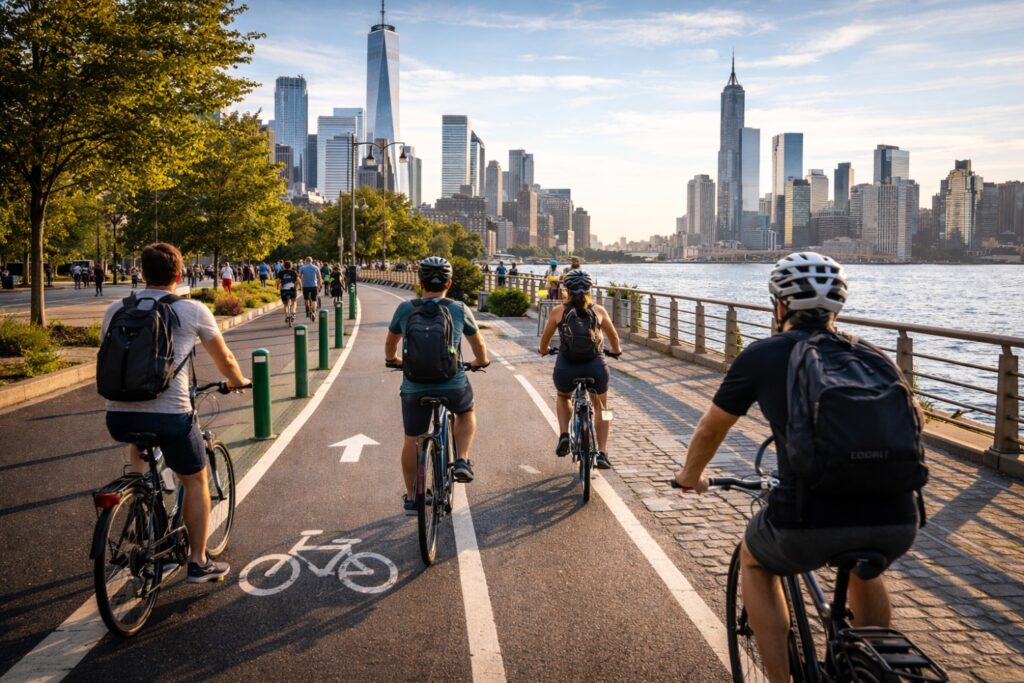
The best bike rides in New York City include the Hudson River Greenway—a 13-mile car-free path from Battery Park to the George Washington Bridge—and the Central Park loop, which circles 6.1 miles through wooded paths and open meadows. Brooklyn's waterfront route connects Brooklyn Bridge Park to Red Hook along protected lanes with Manhattan skyline views. Each route offers dedicated bike infrastructure, making them accessible for riders of all levels year-round.
The Hudson River Greenway carries more cyclists per day than any other path in the United States, yet it remains wide enough to ride without constant shoulder checks. The waterfront route stretches from the southern tip of Manhattan north through Riverside Park, passing piers converted into public parks, basketball courts perched over the river, and long stretches where the only sound is wind off the water. Early mornings bring runners and commuters; late afternoons see families and tourists coasting at a slower pace. Central Park's car-free loop runs counterclockwise, climbing gentle grades past the Jacqueline Kennedy Onassis Reservoir and descending through the Ramble's shaded curves. The northern end feels quieter, with fewer pedestrians and more room to build speed. Weekend closures to car traffic make the full loop accessible, though the southern entrance near Columbus Circle remains the busiest entry point. Citi Bike docking stations ring the perimeter, but the park's hills reward riders with their own bikes and gears. Brooklyn's waterfront paths connect neighborhoods through a patchwork of greenways and protected bike lanes. The route from Brooklyn Bridge Park south to Red Hook passes renovated warehouses, cobblestone streets, and waterfront promenades with unobstructed views of Lower Manhattan. Further east, the Ocean Parkway bike path—the oldest in the United States, opened in 1894—runs straight through residential Brooklyn to Coney Island's boardwalk. Prospect Park's interior loop mirrors Central Park's layout on a smaller scale, with a 3.35-mile circuit that closes to cars year-round. Seasonal conditions shape when and where to ride. Summer heat concentrates on inland routes; waterfront paths catch harbor breezes that drop temperatures by several degrees. Autumn foliage transforms Central Park and Riverside Park into tunnels of orange and red. Winter riding remains possible on cleared paths, though ice patches form in shaded sections near the water. Spring weekends bring the highest traffic, especially on the Brooklyn Bridge approach and the Manhattan Bridge bike lane, which splits cyclists from pedestrians on separate decks.
“The Hudson River Greenway carries more cyclists per day than any other path in the United States.”
The best arrival window is 06:00–10:00 to avoid mid-day crowds and enjoy cooler temperatures for a comfortable ride. Planning your trip during this morning interval ensures a more consistent pace along the Hudson River Greenway.
—
Morning rides offer the clearest paths for cyclists. Commuter traffic is light during this early window.
Mild 55°F–70°F
Temperatures are favorable for long-distance cycling. Vegetation is in bloom along the route.
Cool 55°F–72°F
Crisp air and lower humidity define these months. These conditions provide stable cycling environments.
Verdict: For the most consistent experience, arrive between 06:00–10:00 during the months of April or October.
The Hudson River Greenway offers a dedicated path along the waterfront, connecting several notable parks and points of interest. These landmarks provide clear views of the cityscape and harbor as you navigate the route.
A public park built on a pier with unique architecture and terraced landscaping.
Stop for a moment to view the elevated garden structures.
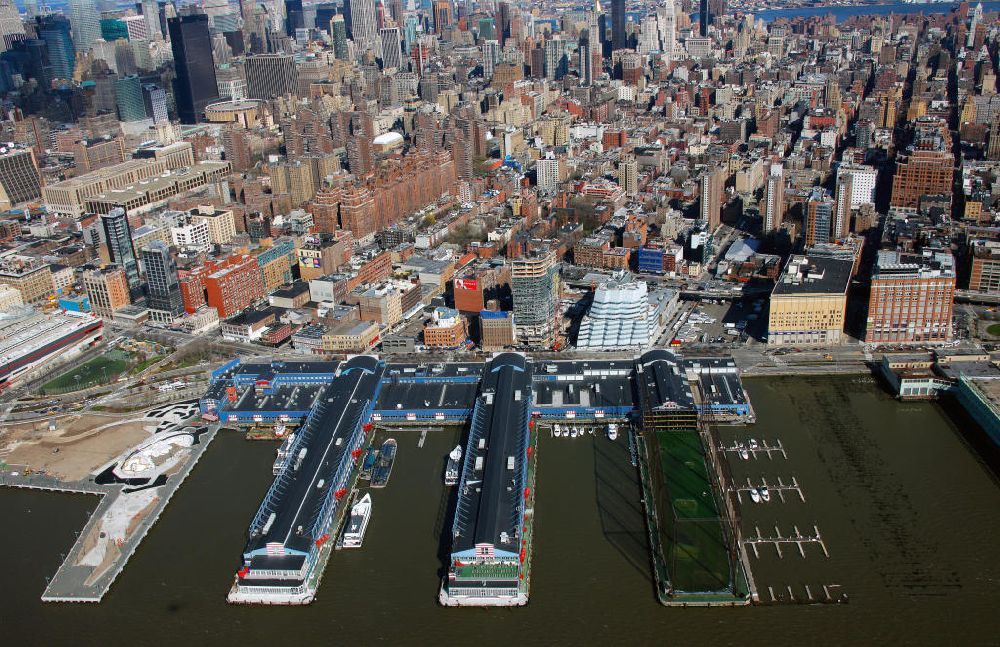
A massive sports and entertainment complex situated along the Hudson River waterfront.
Observe the recreational activity from the adjacent bike path.

A museum housed on the historic aircraft carrier USS Intrepid.
View the exterior of the ship directly from the Greenway path.
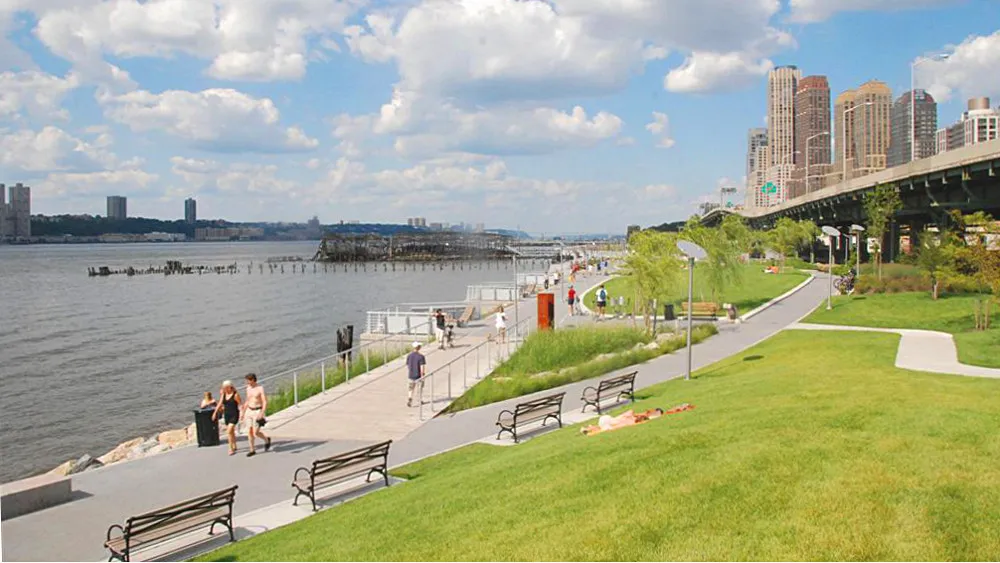
A waterfront park featuring lawns, walking paths, and river access.
Ride through the tree-lined segments for a quieter experience.
New York's bike paths are shared spaces where cyclists, runners, and pedestrians coexist. Lane discipline and awareness keep everyone moving safely.
Everything you need to know about best bike rides new york city
The Hudson River Greenway is consistently ranked among the best bike rides new york city locals and visitors enjoy due to its protected lanes and river views. Other popular options include the paths through Central Park and the Brooklyn Bridge esplanade. Exploring these areas offers a great way to see diverse city landmarks.
Yes, the Hudson River Greenway features wide, flat, and car-free paths that are ideal for a family cycling tour. These paved trails provide a safe environment for riders of all ages to navigate the waterfront. It remains a top choice for a comfortable group outing.
For a comfortable ride, bring a helmet, water, and appropriate weather-ready clothing. Ensure your bicycle is in good working order before heading out on any urban cycle route. Packing these essentials helps you stay prepared throughout your trip.
While independent cycling is common, many travelers choose to join a guided bike tour to learn more about the local history and geography. Booking ahead helps secure your spot with local operators who provide equipment and curated route advice. This is a common way to enhance your experience when seeking the best bike rides new york city offers.